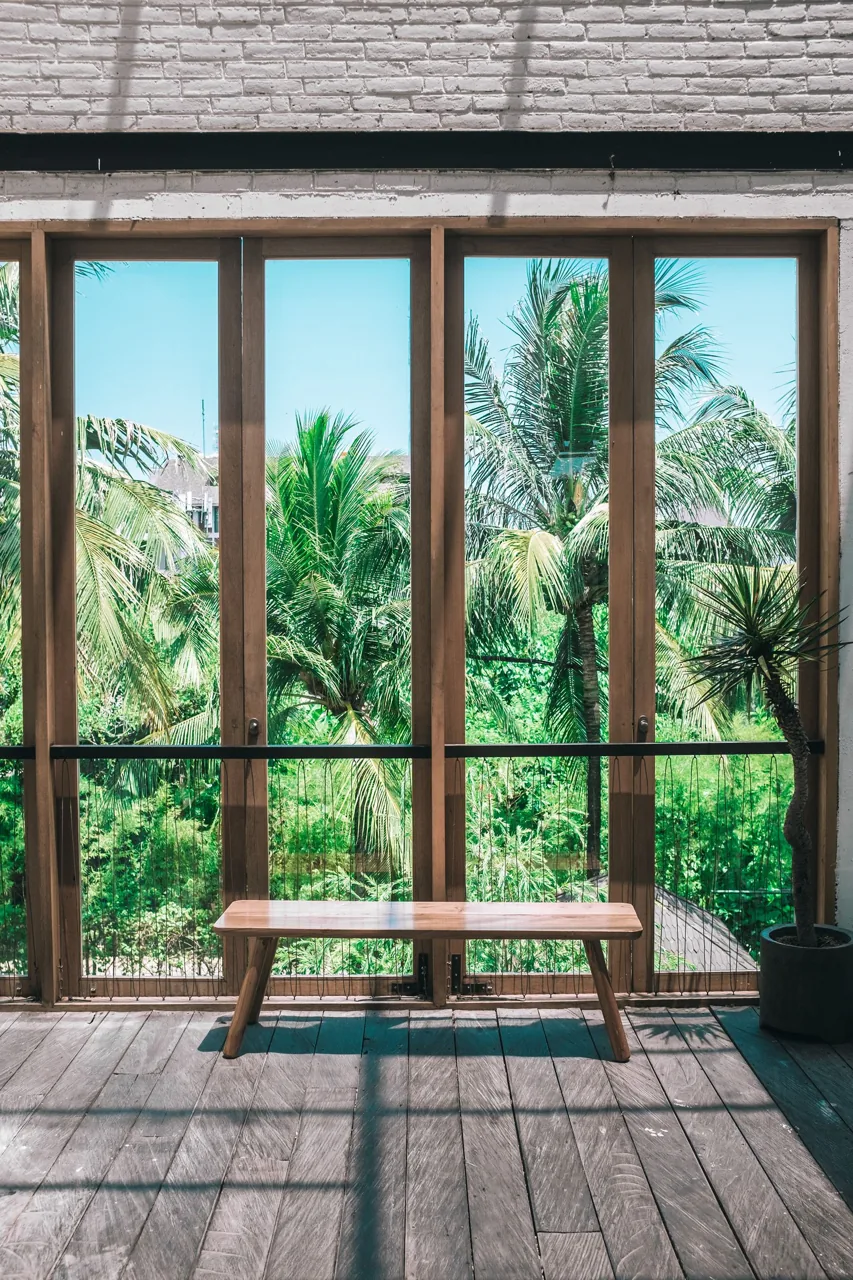

There is a quality certain tropical homes possess that has nothing to do with how expensive they are. You walk in and the space feels composed, as though a cinematographer had lit it — every sightline framed, every shadow intentional. It is not an accident, and it is not the preserve of the very rich. It is a way of thinking about a room.
Light is the lead actor
In the tropics, light is abundant and severe, and a cinematic home works with it rather than against it. Deep overhangs cut hard midday glare into soft pools; a single high window becomes a spotlight on a stone wall; a corridor is left dim so the living room beyond it reads as a bright reveal. Designers speak of chiaroscuro — the play of light and dark — and the best tropical interiors are built on exactly that contrast.
A cinematic room is not the brightest room. It is the one that knows where to put the dark.
Frame the view like a shot
The second move is framing. A doorway aligned precisely on a palm; a window sized and placed so the garden sits in it like a painting; furniture arranged so the eye travels to a single focal point rather than scattering. Each of these is a director's decision about where you look, and they turn an ordinary view into a composition.
The discipline of less
Finally, restraint. Film sets are ruthlessly edited — nothing in shot that does not earn its place. A cinematic home borrows that discipline: a few considered objects in clean space, so the ones that remain carry weight. Clutter kills atmosphere faster than any wrong colour.
Put the three together — worked light, deliberate framing, hard editing — and even a modest tropical house starts to feel like a scene worth pausing on. That, more than marble or money, is what makes a home cinematic.